SAP, SPAR, and the Cost of Broken Systems: Why One Franchisee Chose to Sue
When enterprise systems fail, the damage moves from dashboards to shelves—and sometimes into courtrooms.
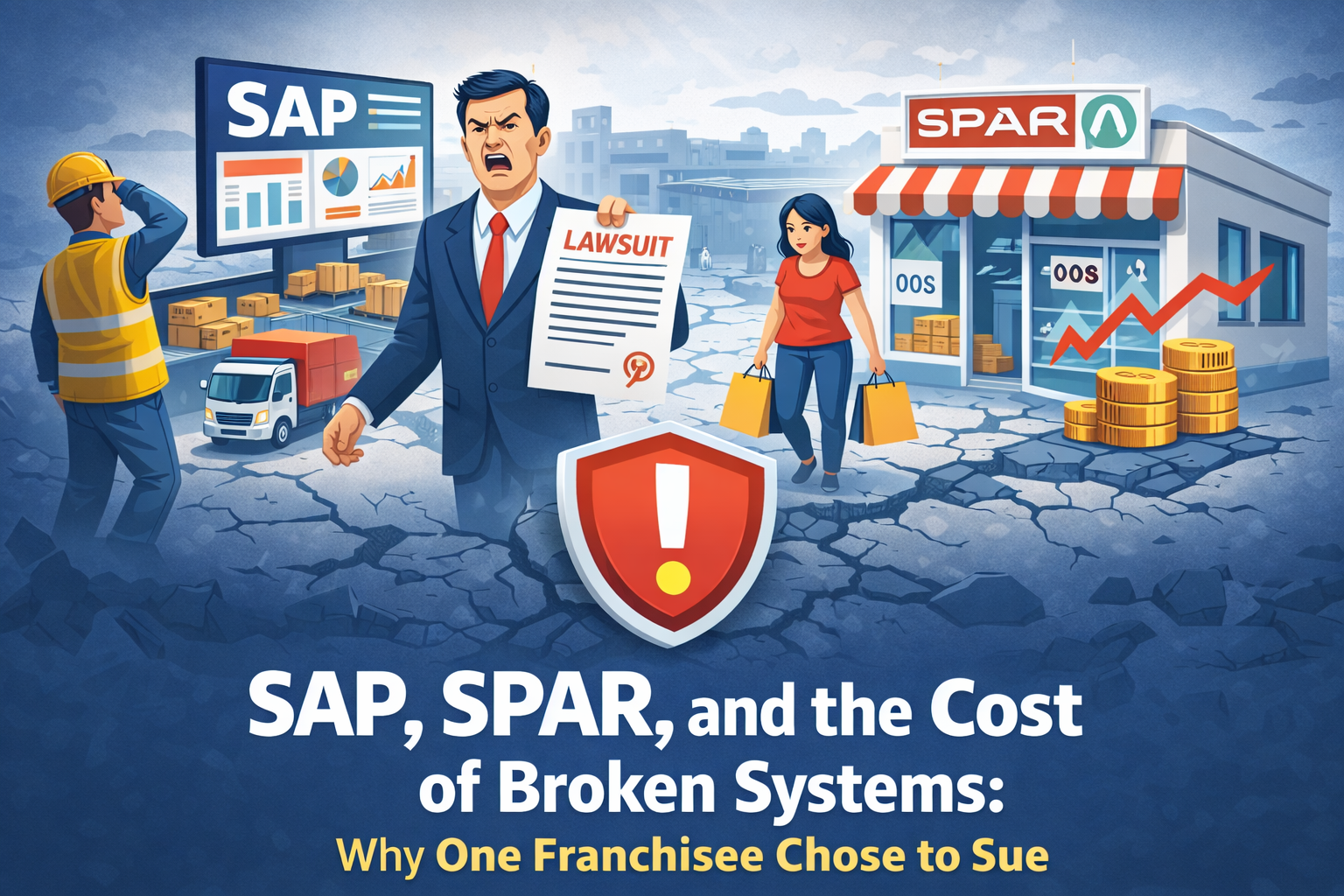
Enterprise systems don’t fail politely. In retail, failure shows up as empty shelves, pricing inconsistencies, and lost margin—and, increasingly, as legal exposure.
The alleged SAP S/4HANA failure at distribution-centre level is more than a technology dispute. It’s a governance and enterprise-risk case study: how operational dependency on a single core system can amplify downstream harm for franchise groups.
When SAP Becomes the Business
At distribution-centre level, SAP is not “back office”. It orchestrates the operational heartbeat: order execution, inventory truth, replenishment cadence, pricing integrity, and financial postings tied to physical movement.
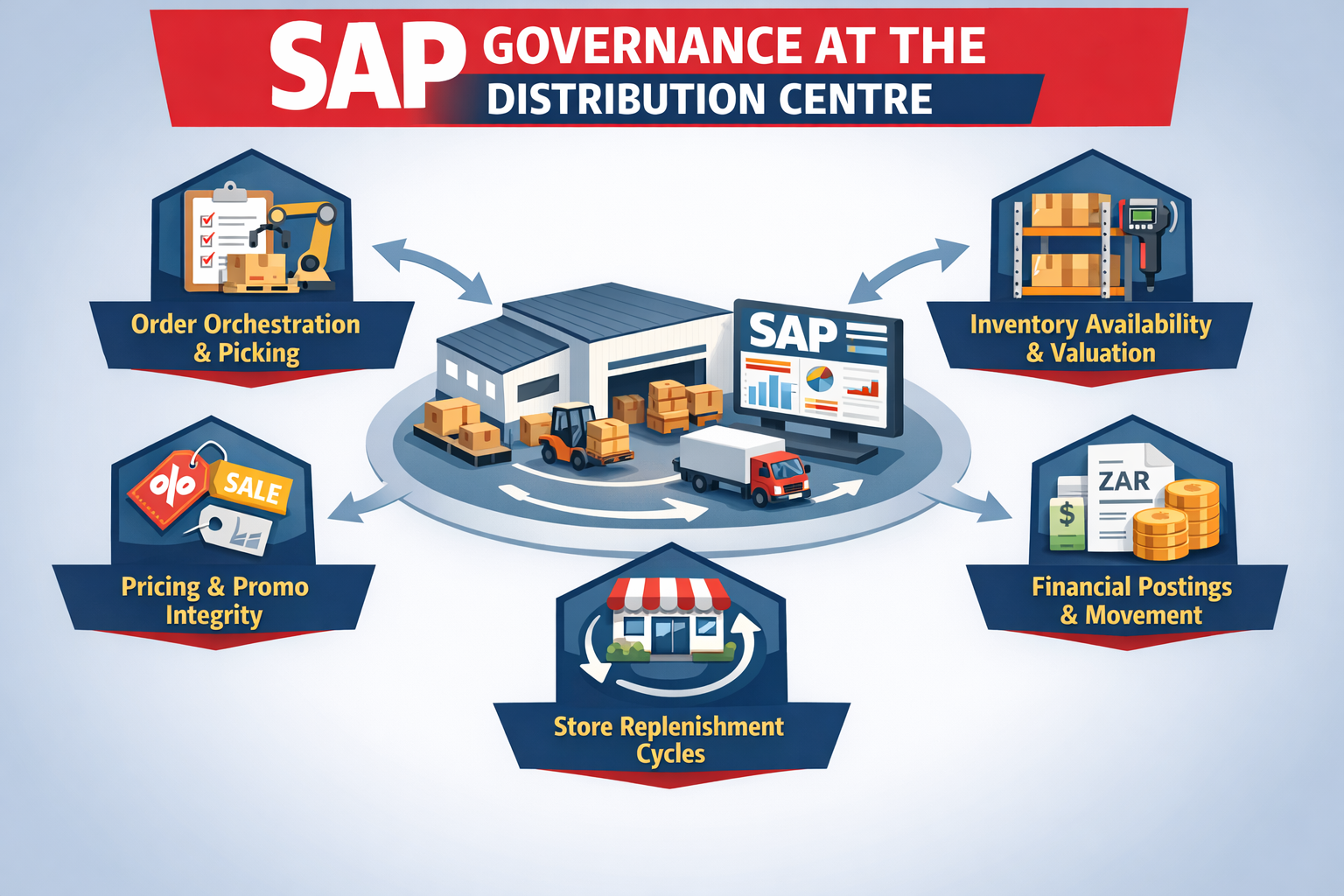
Operational control
Order orchestration, picking, dispatch, and replenishment cycles.
Commercial integrity
Pricing, promotions, margin protection, and financial posting accuracy.
Governance takeaway: many boards now require capability building in ERP literacy and transformation risk. Structured learning pathways can help decision-makers ask better questions earlier in the programme lifecycle. (See: enterprise learning options.)
The Governance Failure Pattern
Large ERP failures rarely hinge on a single technical defect. They follow a repeatable governance pattern:
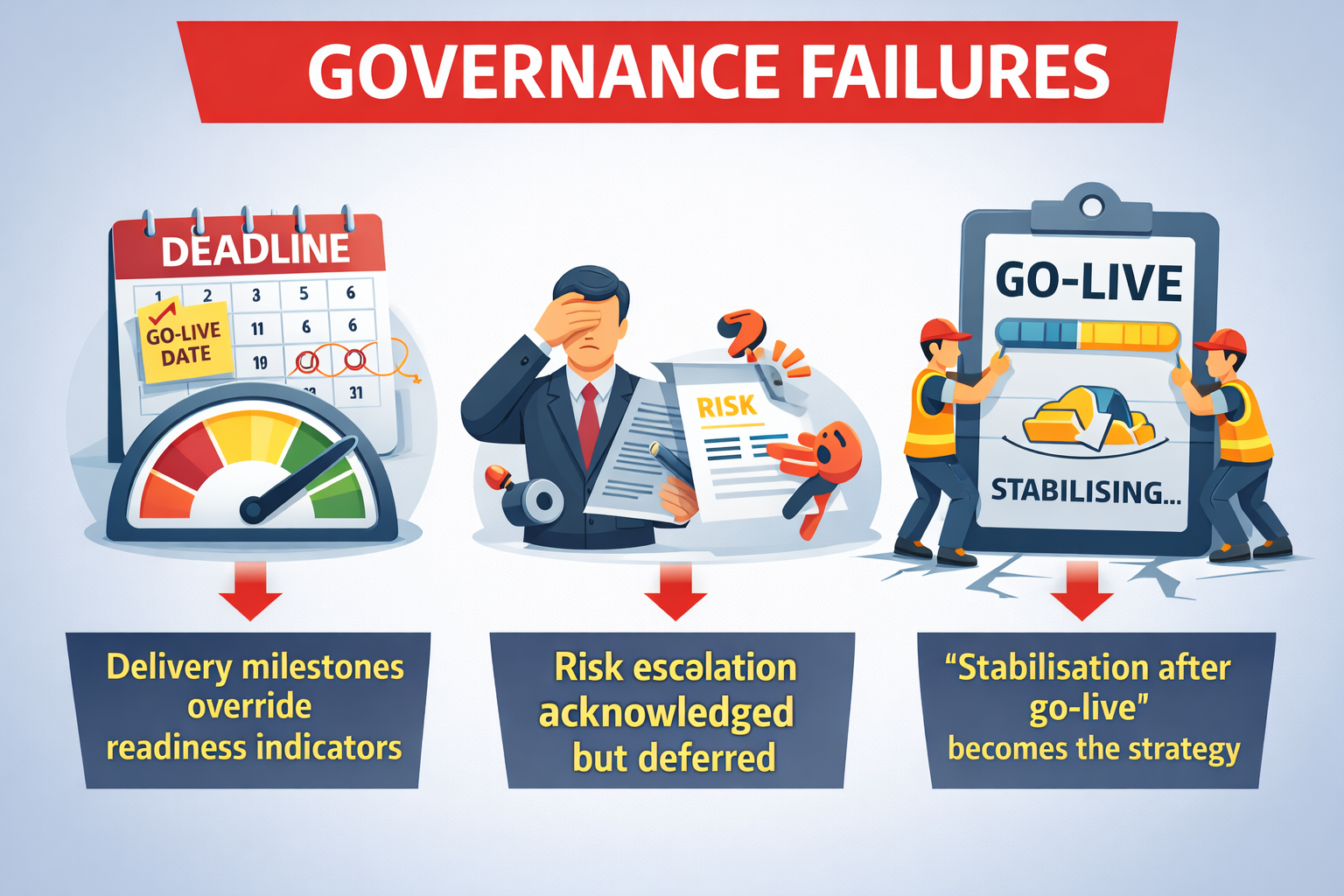
- Delivery milestones override readiness indicators
- Risk escalation is acknowledged but deferred
- “Stabilisation after go-live” becomes the strategy
ERP transformations are not IT projects. They are enterprise-risk events.
Why Large Franchise Groups Are More Exposed
Large franchise operators are structurally more exposed to central-system instability because their scale magnifies the blast radius:
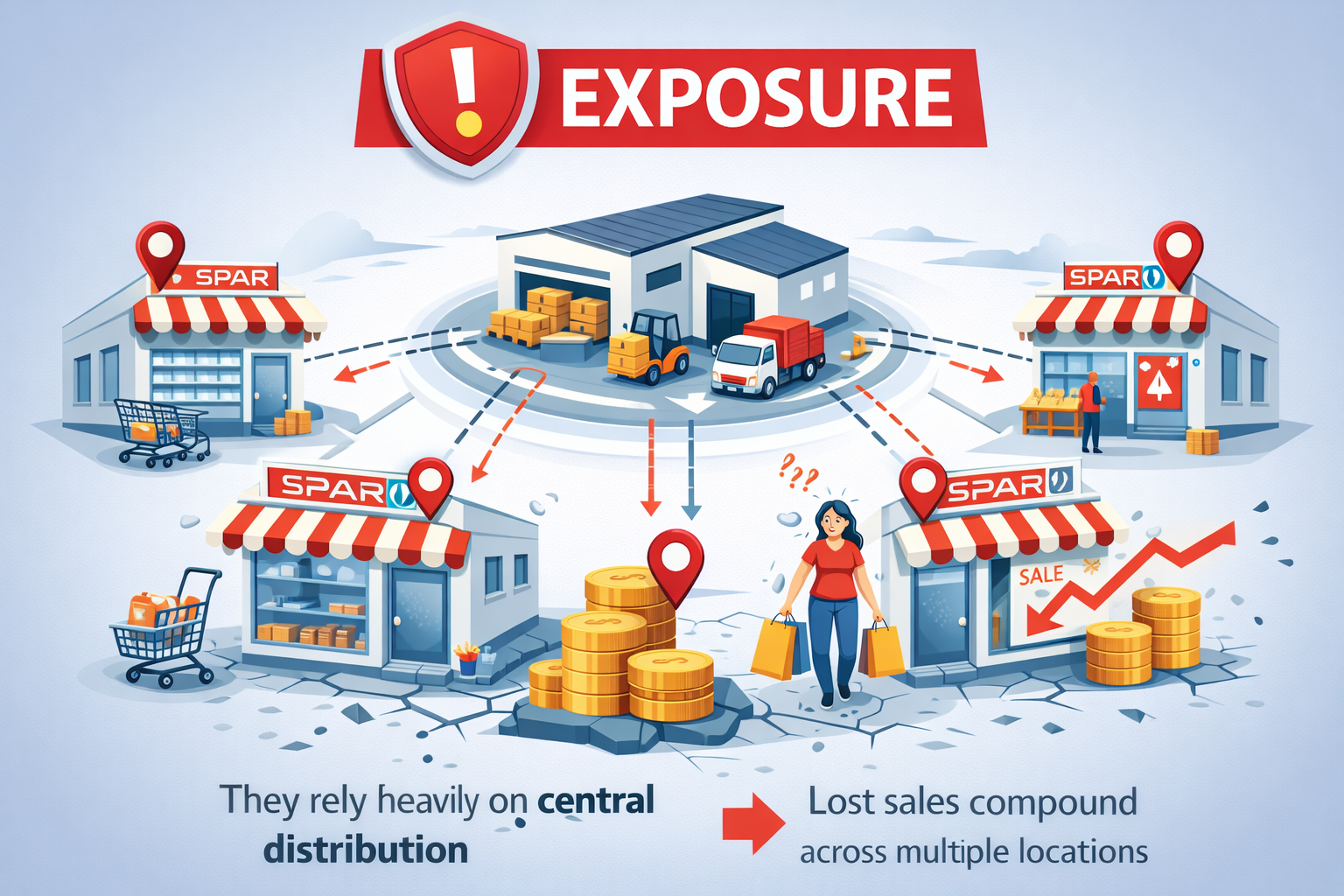
- They rely heavily on central distribution
- Their volume magnifies replenishment errors
- Lost sales compound across multiple locations
- Customer behaviour does not automatically revert post-stabilisation
Risk lens: operational instability becomes financial instability. Many organisations strengthen resilience by improving finance and control visibility alongside transformation programmes. (Explore: Sage finance and operations platforms.)
Technical Sidebar: SAP S/4HANA Failure Patterns in Retail
Board-Level Lesson
The cost of broken systems is not limited to project overruns. It includes margin compression, reputational harm, franchise partner friction, and legal exposure. By the time a dispute reaches court, operational damage has usually already been banked into financial history.
For decentralised retail models, some leaders reduce single-point-of-failure risk by improving commerce + fulfilment visibility and agility. (Explore: Shopify commerce tooling.)
Contextual Resources for Leaders
For boards and executives reviewing their exposure, these resources often support due diligence and capability building.
Disclosure: Some links may be affiliate links. They are included for reference and do not influence the editorial analysis.
FAQ
Why do SAP S/4HANA projects fail in retail distribution?
Most failures are systemic: weak master data, incomplete end-to-end testing, integration gaps (warehouse → inventory → finance), and governance decisions that compress readiness in favour of delivery milestones.
What should boards ask before approving go-live?
Ask for objective readiness criteria, cutover risk controls, parallel run strategy (if any), warehouse throughput test evidence, master data quality metrics, and a funded stabilisation plan with measurable service-level targets.
Why are franchise groups more vulnerable than single-store operators?
Scale amplifies dependency: volume magnifies replenishment errors, lost sales compound across sites, and customer behaviour may not revert even after stabilisation—making recovery non-linear.




No comments:
Post a Comment